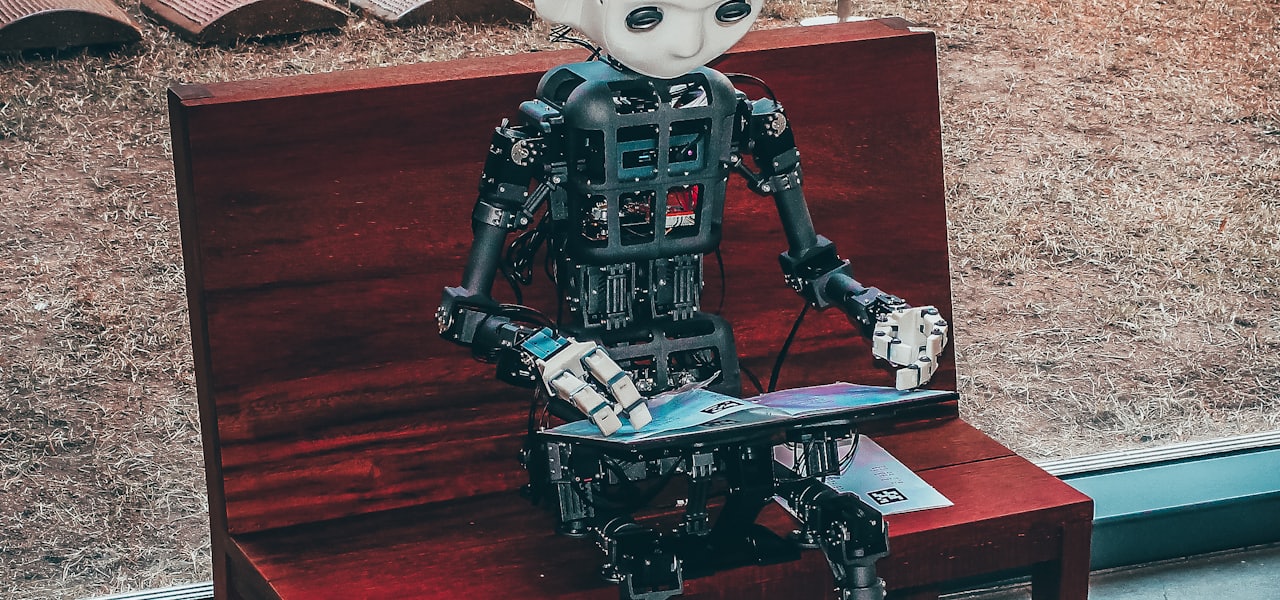
A fuzzy control system is a control system based on fuzzy logic – a mathematical system that analyzes analog input values in terms of logical variables that take on continuous values between 0 and 1, in contrast to classical or digital logic, which operates on discrete values of either 1 or 0 (true or false, respectively). Fuzzy logic is widely used in machine control. The term "fuzzy" refers to the fact that the logic involved can deal with concepts that cannot be expressed as the "true" or "false" but rather as "partially true". Although alternative approaches such as genetic algorithms and neural networks can perform just as well as fuzzy logic in many cases, fuzzy logic has the advantage that the solution to the problem can be cast in terms that human operators can understand, such that that their experience can be used in the design of the controller. This makes it easier to mechanize tasks that are already successfully performed by humans. == History and applications == Fuzzy logic was proposed by Lotfi A. Zadeh of the University of California at Berkeley in a 1965 paper. He elaborated on his ideas in a 1973 paper that introduced the concept of "linguistic variables", which in this article equates to a variable defined as a fuzzy set. Other research followed, with the first industrial application, a cement kiln built in Denmark, coming on line in 1976. Fuzzy systems were initially implemented in Japan. Interest in fuzzy systems was sparked by Seiji Yasunobu and Soji Miyamoto of Hitachi, who in 1985 provided simulations that demonstrated the feasibility of fuzzy control systems for the Sendai Subway. Their ideas were adopted, and fuzzy systems were used to control accelerating, braking, and stopping when the Namboku Line opened in 1987. In 1987, Takeshi Yamakawa demonstrated the use of fuzzy control, through a set of simple dedicated fuzzy logic chips, in an "inverted pendulum" experiment. This is a classic control problem, in which a vehicle tries to keep a pole mounted on its top by a hinge upright by moving back and forth. Yamakawa subsequently made the demonstration more sophisticated by mounting a wine glass containing water and even a live mouse to the top of the pendulum: the system maintained stability in both cases. Yamakawa eventually went on to organize his own fuzzy-systems research lab to help exploit his patents in the field. Japanese engineers subsequently developed a wide range of fuzzy systems for both industrial and consumer applications. In 1988 Japan established the Laboratory for International Fuzzy Engineering (LIFE), a cooperative arrangement between 48 companies to pursue fuzzy research. The automotive company Volkswagen was the only foreign corporate member of LIFE, dispatching a researcher for a duration of three years. Japanese consumer goods often incorporate fuzzy systems. Matsushita vacuum cleaners use microcontrollers running fuzzy algorithms to interrogate dust sensors and adjust suction power accordingly. Hitachi washing machines use fuzzy controllers to load-weight, fabric-mix, and dirt sensors and automatically set the wash cycle for the best use of power, water, and detergent. Canon developed an autofocusing camera that uses a charge-coupled device (CCD) to measure the clarity of the image in six regions of its field of view and use the information provided to determine if the image is in focus. It also tracks the rate of change of lens movement during focusing, and controls its speed to prevent overshoot. The camera's fuzzy control system uses 12 inputs: 6 to obtain the current clarity data provided by the CCD and 6 to measure the rate of change of lens movement. The output is the position of the lens. The fuzzy control system uses 13 rules and requires 1.1 kilobytes of memory. An industrial air conditioner designed by Mitsubishi uses 25 heating rules and 25 cooling rules. A temperature sensor provides input, with control outputs fed to an inverter, a compressor valve, and a fan motor. Compared to the previous design, the fuzzy controller heats and cools five times faster, reduces power consumption by 24%, increases temperature stability by a factor of two, and uses fewer sensors. Other applications investigated or implemented include: character and handwriting recognition; optical fuzzy systems; robots, including one for making Japanese flower arrangements; voice-controlled robot helicopters (hovering is a "balancing act" rather similar to the inverted pendulum problem); rehabilitation robotics to provide patient-specific solutions (e.g. to control heart rate and blood pressure ); control of flow of powders in film manufacture; elevator systems; and so on. Work on fuzzy systems is also proceeding in North America and Europe, although on a less extensive scale than in Japan. The US Environmental Protection Agency has investigated fuzzy control for energy-efficient motors, and NASA has studied fuzzy control for automated space docking: simulations show that a fuzzy control system can greatly reduce fuel consumption. Firms such as Boeing, General Motors, Allen-Bradley, Chrysler, Eaton, and Whirlpool have worked on fuzzy logic for use in low-power refrigerators, improved automotive transmissions, and energy-efficient electric motors. In 1995 Maytag introduced an "intelligent" dishwasher based on a fuzzy controller and a "one-stop sensing module" that combines a thermistor, for temperature measurement; a conductivity sensor, to measure detergent level from the ions present in the wash; a turbidity sensor that measures scattered and transmitted light to measure the soiling of the wash; and a magnetostrictive sensor to read spin rate. The system determines the optimum wash cycle for any load to obtain the best results with the least amount of energy, detergent, and water. It even adjusts for dried-on foods by tracking the last time the door was opened, and estimates the number of dishes by the number of times the door was opened. Xiera Technologies Inc. has developed the first auto-tuner for the fuzzy logic controller's knowledge base known as edeX. This technology was tested by Mohawk College and was able to solve non-linear 2x2 and 3x3 multi-input multi-output problems. Research and development is also continuing on fuzzy applications in software, as opposed to firmware, design, including fuzzy expert systems and integration of fuzzy logic with neural-network and so-called adaptive "genetic" software systems, with the ultimate goal of building "self-learning" fuzzy-control systems. These systems can be employed to control complex, nonlinear dynamic plants, for example, human body. == Fuzzy sets == The input variables in a fuzzy control system are in general mapped by sets of membership functions similar to this, known as "fuzzy sets". The process of converting a crisp input value to a fuzzy value is called "fuzzification". The fuzzy logic based approach had been considered by designing two fuzzy systems, one for error heading angle and the other for velocity control. A control system may also have various types of switch, or "ON-OFF", inputs along with its analog inputs, and such switch inputs of course will always have a truth value equal to either 1 or 0, but the scheme can deal with them as simplified fuzzy functions that happen to be either one value or another. Given "mappings" of input variables into membership functions and truth values, the microcontroller then makes decisions for what action to take, based on a set of "rules", each of the form: IF brake temperature IS warm AND speed IS not very fast THEN brake pressure IS slightly decreased. In this example, the two input variables are "brake temperature" and "speed" that have values defined as fuzzy sets. The output variable, "brake pressure" is also defined by a fuzzy set that can have values like "static" or "slightly increased" or "slightly decreased" etc. === Fuzzy control in detail === Fuzzy controllers are very simple conceptually. They consist of an input stage, a processing stage, and an output stage. The input stage maps sensor or other inputs, such as switches, thumbwheels, and so on, to the appropriate membership functions and truth values. The processing stage invokes each appropriate rule and generates a result for each, then combines the results of the rules. Finally, the output stage converts the combined result back into a specific control output value. The most common shape of membership functions is triangular, although trapezoidal and bell curves are also used, but the shape is generally less important than the number of curves and their placement. From three to seven curves are generally appropriate to cover the required range of an input value, or the "universe of discourse" in fuzzy jargon. As discussed earlier, the processing stage is based on a collection of logic rules in the form of IF-THEN statements, where the IF part is called the "antecedent" and the THEN part is called the "consequent". Typical fuzzy
Latent semantic mapping
Latent semantic mapping (LSM) is a data-driven framework to model globally meaningful relationships implicit in large volumes of (often textual) data. It is a generalization of latent semantic analysis. In information retrieval, LSA enables retrieval on the basis of conceptual content, instead of merely matching words between queries and documents. LSM was derived from earlier work on latent semantic analysis. There are 3 main characteristics of latent semantic analysis: Discrete entities, usually in the form of words and documents, are mapped onto continuous vectors, the mapping involves a form of global correlation pattern, and dimensionality reduction is an important aspect of the analysis process. These constitute generic properties, and have been identified as potentially useful in a variety of different contexts. This usefulness has encouraged great interest in LSM. The intended product of latent semantic mapping, is a data-driven framework for modeling relationships in large volumes of data. Mac OS X v10.5 and later includes a framework implementing latent semantic mapping.
Sysomos
Sysomos Inc. is a Toronto-based social media analytics company owned by Outside Insight market leaders Meltwater. The company developed text analytics and machine learning technologies for user generated content, and served 80% of the top agencies and Fortune 500. == History == Sysomos was founded by Nilesh Bansal and Nick Koudas. The company is a spinoff of the University of Toronto research project BlogScope. The BlogScope project, which started in 2005, resulted in creation of the underlying content aggregation and analysis engine commercialized by Sysomos. The company raised venture capital in 2008 and was acquired by Marketwire in 2010. The company's original flagship product, Media Analysis Platform (MAP), mines and analyzes content from social media or user-generated content to create a picture of media coverage. Sysomos launched its flagship offering MAP in Sept 2007, followed by addition of Heartbeat to its product suite in 2009. In addition to the two main products, the company released FourWhere, a free location-based social search service that mashes up Foursquare in March 2010. The company also offers Sysomos Heartbeat which provides social media monitoring and engagement capabilities to communication professionals, brand managers and customer support groups. In 2013, Heartbeat was extended to add publishing components to deliver a complete end-to-end social media marketing platform. On July 6, 2010, it was announced that Marketwire, a press release distribution company, had acquired Sysomos. After the acquisition, Sysomos founders Nick Koudas and Nilesh Bansal, left Sysomos to start Aislelabs. In February 2015, Sysomos split from Marketwired, as an independent company, and appointed Adnan Ahmed as the new CEO. In March 2015, newly independent Sysomos launched a redesign for its Heartbeat product and a new API for its MAP product. In the same year, the company acquired Expion. In September 2016, Peter Heffring was announced as the new CEO. In April 2017, Sysomos showcased a new unified platform offering new insights. In April 2018, media monitoring firm Meltwater announced it had acquired Sysomos. The CEO of Sysomos, Peter Heffring, said the company will continue to operate as an independent unit of Meltwater. Heffring will run the social analytics division of Meltwater. == Reports == Inside Twitter series of reports is the most extensive third-party survey on Twitter's growth and demographics. Another extensive survey regarding the top 5% of most active Twitter users found that over 25% of all tweets are machine created. The report also confirms Twitter's international growth. Inside Facebook Pages report found that only four percent of pages have more than 10,000 fans, 0.76% of pages have more than 100,000 fans, and 0.05% of pages (or 297 in total) have more than a million fans. Inside YouTube reports focus more on video hosting services and YouTube.
Star Awards for Social Media Award
The Star Awards for Social Media Award was an award presented annually from 2014 to 2016 at the Star Awards, where Mediacorp of Singapore recognises entertainers under their employment with awards for artistic and technical merit for outstanding performances of the year. == History == The category was introduced in 2014, at the 20th Star Awards ceremony; Jeanette Aw received the award and it is given in honour of a Mediacorp artiste with the most social media engagement. The results are based on the calculations from three international social media analysis systems; artistes must be active on at least one of the following platforms in order to qualify: Facebook, Twitter and Instagram. Since its inception, the award has been given to two artistes. Carrie Wong is the most recent and final winner in this category. Since the ceremony held in 2016, Aw remains as the only artiste to win in this category twice, surpassing Wong who has one win. The award was discontinued from 2017 onwards as the popularity element of the award is already represented in the Top 10 Most Popular Male Artistes and Top 10 Most Popular Female Artistes awards. == Recipients ==
SocialIQ
Social IQ (formerly Soovox Inc.) was a San Diego-based influencer marketing platform that measured users' online social influence and connected them with brands for word-of-mouth marketing campaigns. The company was founded in 2009 by Akram Benmbarek and was headquartered in San Diego, California. == History == Akram Benmbarek, who had previously worked in technology finance at Advanced Equities Financial Corp and in wealth management at Morgan Stanley, Merrill Lynch, and UBS, founded the company in mid-2009 under the name Soovox. In October 2011, Benmbarek rebranded the company as SocialIQ. At that time, the company was seeking a Series A round of venture capital, having raised under $1 million in angel seed funding. == Similar metrics == Klout PeerIndex
Screen space directional occlusion
Screen space directional occlusion (SSDO) is a computer graphics technique enhancing screen space ambient occlusion (SSAO) by taking direction into account to sample the ambient light (both the light coming directly at an object, as well as the light reflected off of the object directly behind it), to better approximate global illumination. SSDO was introduced by Tobias Ritschel, Thorsten Grosch, and Hans-Peter Seidel in their 2009 ACM Symposium on Interactive 3D Graphics and Games paper Approximating dynamic global illumination in image space, which describes it as extending SSAO to directional occlusion with one diffuse indirect bounce of light; later literature notes that SSDO still suffers from common screen-space artifacts such as noise and banding. == Method == The original SSDO paper describes a two-pass screen-space approach, with one pass for direct lighting and a second pass for indirect bounces. Later literature describes SSDO as assuming a general shadowing direction that allows color bleeding and a single light bounce.
Cognos ReportNet
Cognos ReportNet (CRN) was a web-based software product for creating and managing ad hoc and custom-made reports. ReportNet was developed by the Ottawa-based company Cognos (formerly Cognos Incorporated), an IBM company. The web-based reporting tool was launched in September 2003. Since IBM's acquisition of Cognos, ReportNet has been renamed IBM Cognos ReportNet like all other Cognos products. ReportNet uses web services standards such as XML and Simple Object Access Protocol and also supports dynamic HTML and Java. ReportNet is compatible with multiple databases including Oracle, SAP, Teradata, Microsoft SQL server, DB2 and Sybase. The product provides interface in over 10 languages, has Web Services architecture to meet the needs of multi-national, diversified enterprises and helps reduce total cost of ownership. Multiple versions of Cognos ReportNet have since been released by the company. Cognos ReportNet was awarded the Software and Information Industry Association (SIIA) 2005 Codie awards for the "Best Business Intelligence or Knowledge Management Solution" category. CRN's capabilities have been further used in IBM Cognos 8 BI (2005), the latest reporting tool. CRN comes with its own software development kit (SDK). == Launch == Early adopters of Cognos ReportNet for their corporate reporting needs included Bear Stearns, BMW and Alfred Publishing. Around this same time of launch, Cognos competitor Business Objects released version 6.1 of its enterprise reporting tool. Cognos ReportNet has been successful since its launch, raising revenues in 2004 from licensing fees. == Controversy == Cognos rival Business Objects announced in 2005 that BusinessObjects XI significantly outperformed Cognos ReportNet in benchmark tests conducted by VeriTest, an independent software testing firm. The tests performed showed Cognos ReportNet performed poorly when processing styled reports, complex business reports and combination of both. The tests reported a massive 21 times higher report throughput for BusinessObjects XI than Cognos ReportNet at capacity loads. Cognos soon dismissed the claims by stating Business Objects dictated the environment and testing criteria and Cognos did not provide the software to participate in benchmark test. Cognos later performed their own test to demonstrate Cognos ReportNet capabilities. == Components == Cognos Report Studio – A Web-based product for creating complex professional looking reports. Cognos Query Studio - A Web-based product for creating ad-hoc reports. Cognos Framework Manager – A metadata modeling tool to create BI metadata for reporting and dashboard applications. Cognos Connection – Main portal used to access reports, schedule reports and perform administrator activities. == Versions == Cognos ReportNet 1.1 – Java EE-style professional web-based authoring tool. (base version) Cognos ReportNet IBM Special Edition – comes with an embedded version of IBM WebSphere as its application server and IBM DB2 as its data store. Cognos Linux – for Intel-based Linux platforms.